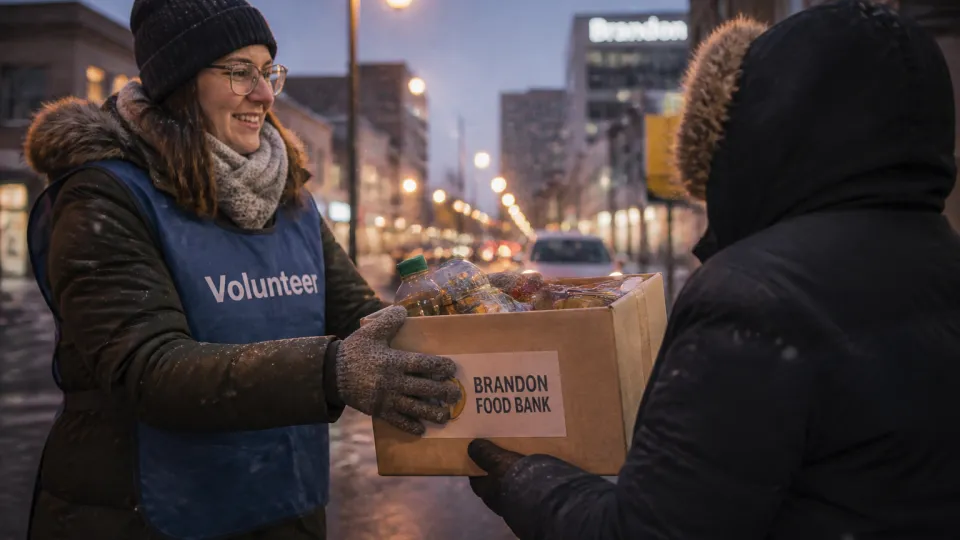
On a brittle November morning, a small convoy of SUVs threaded through Brandon's north-end streets carrying cardboard boxes cold to the touch. Inside each box were sandwiches, toiletries, and handwritten notes for people who would show up at the community hall later that day. At the wheel was Marta K., a retired nurse who has spent the last six years folding shirts, packing hampers and driving for what she calls 'a weekend habit that keeps me human.'
The scene — volunteers moving quietly between cars and church basements, youth groups running donation drives, employers releasing teams for a half-day of service — has become familiar across Westman. But the steady sigh of civic goodwill masks a deeper, more complex story: volunteerism in Brandon and surrounding towns is not simply enduring; it is being remade by demographics, new expectations of time, and the relentless growth of need.
'We have more demand and fewer long-term volunteers,' says Sara L., operations coordinator at the Brandon Food Bank, who asked that her last name be withheld. 'People still want to help. They just have less capacity to commit in the old ways.'
Several converging trends shape that capacity. First, an aging volunteer base remains deeply engaged, especially in food security and seniors' services, but many are stepping back for reasons of health or caregiving. Second, younger residents want to contribute, but on their own terms: evening shifts, project-based commitments, or digital-only tasks. Third, service agencies are dealing with more complex needs — multi-generational poverty, newcomers requiring settlement support, and rising mental-health pressures — which require skilled coordination rather than ad hoc hands.
Those patterns are visible in projects that have flourished and those that have struggled. A weekly community kitchen in downtown Brandon, started by a coalition of faith groups and a few nonprofit leaders, now feeds more than 120 people nightly. It runs on volunteer cooks, but depends on a small paid coordinator who manages volunteers, schedules, and liability issues. Without that paid role, several volunteers say the program would fragment under informal leadership changes.
By contrast, a volunteer-driven transit shuttle for older adults in a nearby town almost folded last year when three of the regular drivers retired and organizers failed to recruit replacements quickly. 'We discovered how fragile these systems are when a few people step away,' a council member observed at a public meeting. The town scrambled to secure a municipal budget line and a part-time driver, converting volunteer goodwill into paid, accountable infrastructure.
New models are also taking root. Micro-volunteering — short, task-based contributions coordinated by local platforms and community foundations — is lowering the barrier to entry. A one-off Saturday packaging session for newcomer welcome kits drew dozens of university students who might not have signed up for a weekly shift. Employers, too, are recalibrating: instead of annual corporate days, some are offering regular paid volunteer time or supporting skills-based pro bono work for nonprofits.
Yet these innovations do not erase structural barriers. Transportation, unpredictable work schedules, child-care needs and accessibility continue to exclude would-be volunteers. 'It's about designing roles that fit people's lives and recognizing that time isn't the only currency,' says Emily R., program director at a regional foundation. The foundation has recently funded small stipends for volunteer coordinators and offered micro-grants to organizations testing flexible models.
There is also a quiet, human cost to the scramble. Volunteers who stay often shoulder heavier workloads, and frontline coordinators report fatigue and burnout. Emotional labor — supporting people in crisis night after night — creates turnover that is invisible until a service falters.
So what does the future of volunteerism look like for Westman? The answers are local and practical. Municipalities can treat volunteer capacity as public infrastructure: invest in paid coordinators and modest stipends, support transportation partnerships, and include volunteer strategy in emergency planning. Nonprofits can professionalize volunteer management without losing community warmth, offering bite-sized commitments and recognizing transferable skills. Schools and post-secondary institutions can formalize community service as reciprocal learning, not mandatory ticking of a box.
There are promising signs. In one Brandon neighborhood, a pilot program partners high-school students with older volunteers for digital literacy tutoring. The students earn credit and the seniors gain confidence using video calls to keep in touch with family. Elsewhere, cross-sector tables convened by the regional community foundation are mapping needs and aligning volunteer roles across agencies to reduce duplication and fill gaps.
Ultimately, volunteerism in Westman is less about nostalgia for a past civic model and more about translating neighborly impulse into durable systems. Marta K., back at her car with another route to make, is unambiguous about the stakes. 'I do it because someone did it for me when I was new here,' she says. 'If we stop figuring this out, we lose more than services — we lose the ways people find each other.'
The challenge ahead is not to coax people into volunteering the way they used to, but to honor their time, reskill organizations for modern realities and build supports that make volunteering equitable and sustainable. In a region where mutual reliance has long been a practical necessity, redesigning how residents give — and how institutions receive that giving — may be the most consequential work of community building in the decade to come.